


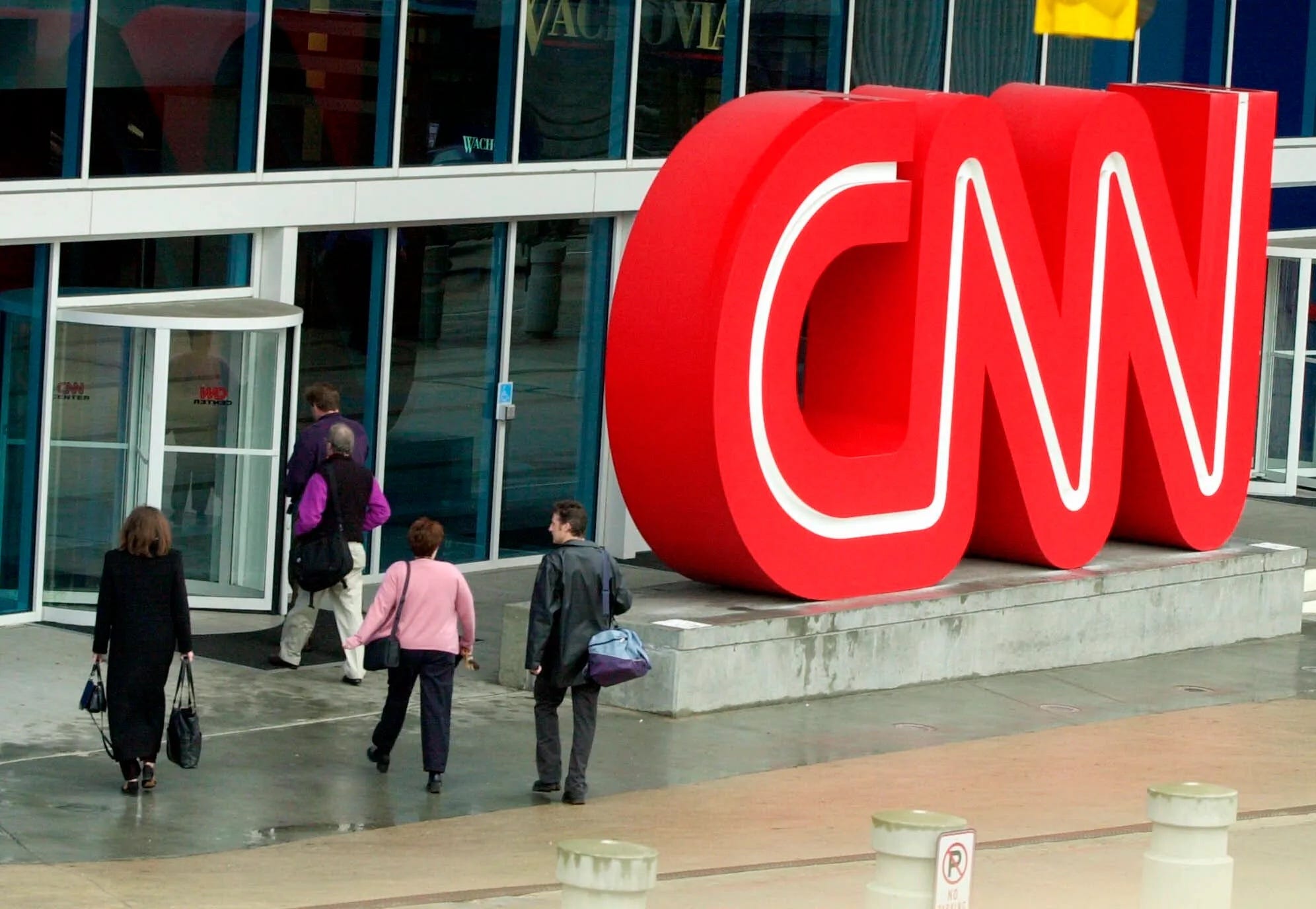
The hottest seat at CNN this month is a chair in Amy Entelis’s office.
Entelis runs on-air talent, and according to the New York Times this morning, her eighteenth-floor suite has turned into a kind of group-therapy room, a place where anxious anchors keep drifting in to unload about the thing bearing down on all of them. The thing is David Ellison’s deal: a $111 billion merger, weeks from closing, that would put CNN and CBS News under the same owner.
The dread has a specific source. Ellison already controls CBS, where Bari Weiss controversially took over the news division last October with almost no broadcast experience, fired the leadership of 60 Minutes, and drew public accusations of editorial interference from the correspondents she pushed out. She is now reportedly in the running to oversee CNN, a network several times the size of the one she’s been running. The people at CNN have watched the preview, and they don’t like the ending.
Most people are reading this as a story about Donald Trump, Bari Weiss, and editorial independence. They may be right. I just don’t think that’s the most interesting story.
The bigger risk isn’t that David Ellison politicizes CNN. It’s that he means what he says.
Ellison has promised CNN’s editorial independence “will absolutely be maintained.” He has also said he wants his news networks to reach the middle “70 percent” of the country. Admirable goal. But look at what he actually bought. CNN is on track to clear roughly $650 million in profit this year, and that money does not come from the placid center of American life.
So when Michael Grynbaum and Benjamin Mullin’s story hit the Times this morning, it moved through cable newsrooms the way these stories do, in group texts and the quiet count of who’s talking to whom. Anderson Cooper has told colleagues he won’t work for Weiss. Kara Swisher says she’ll walk if Ellison replaces Mark Thompson at the top. Jake Tapper reportedly met with Ellison face-to-face in Los Angeles. Everyone is reading this as a fight over editorial independence, with Ellison’s documented coziness toward Trump as the threat in the wings.
I’d watch what the principals are doing instead of what they’re saying.
This is how expensive television talent behaves during an ownership transition. It looks like principle, and some of it surely is. It also looks like leverage. The two tend to run together during a sale, which is exactly what makes a moment like this so hard to read from the outside, and why I won’t pretend to know what’s in anyone’s heart.
Here’s what doesn’t require mind-reading. Nobody has quit.
Cooper is telling colleagues. Swisher is giving interviews. Tapper is taking the meeting. Entelis is hearing everyone out. Those are all acts of staying. The entire roster is sitting tight, waiting to see what deal emerges and where they land inside it. That’s the posture of people negotiating, and these happen to be some of the best-paid negotiators in the business.
None of which is a knock on them. Talent has always worked an ownership change for whatever it’s worth, a better contract or a richer way out, and a CNN star would be a fool to do otherwise. But the behavior on the screen is the behavior of people positioning themselves, and that’s a different story than the one currently being told.
It comes from intensity. Wars. Elections. Disasters. Breaking news that interrupts dinner. The hours when viewers feel they can’t afford to look away. CNN built its commercial value by becoming indispensable precisely when the country stopped changing the channel.
A skeptic will push back here, and the pushback is fair. A lot of that $650 million is carriage fees, the per-subscriber money cable operators pay whether or not anyone is watching, much of it locked in by deals signed years ago. True. The profit is stickier than the ratings. But carriage fees get renegotiated, and the leverage to push them higher comes from the very thing Ellison says he wants to tone down. What makes operators reluctant to drop CNN is the expectation that, when history happens, viewers expect to find it there. Strip away that indispensability and you’ve weakened the strongest card the network carries into its next negotiation.
CNN has already run a version of this experiment once. Chris Licht tried to cool the temperature, move away from performative outrage, and appeal to a broader middle. Whatever else went wrong during his tenure, the audience never followed. That’s worth remembering before assuming moderation is an untapped growth strategy.
So set the personalities aside for a second, along with Weiss and even Trump. The genuinely hard problem Ellison has handed himself is this. He wants a less polarizing CNN. He also wants to keep its profits. It is not at all clear those are the same network. This threat is different. It doesn’t come from political pressure. It comes from Ellison’s own strategy. If he really does pull the channel toward the agreeable middle, he might find he’s quietly dismantled the thing he paid $111 billion to own.
At Ted Turner’s memorial in Atlanta this month, his grandson told the room that Turner would never have stayed quiet about the hollowing out of the institutions he built.
The threat to CNN that’s easiest to name is an owner too close to a president.
The harder one to answer is an owner who doesn’t seem to understand what he bought.