


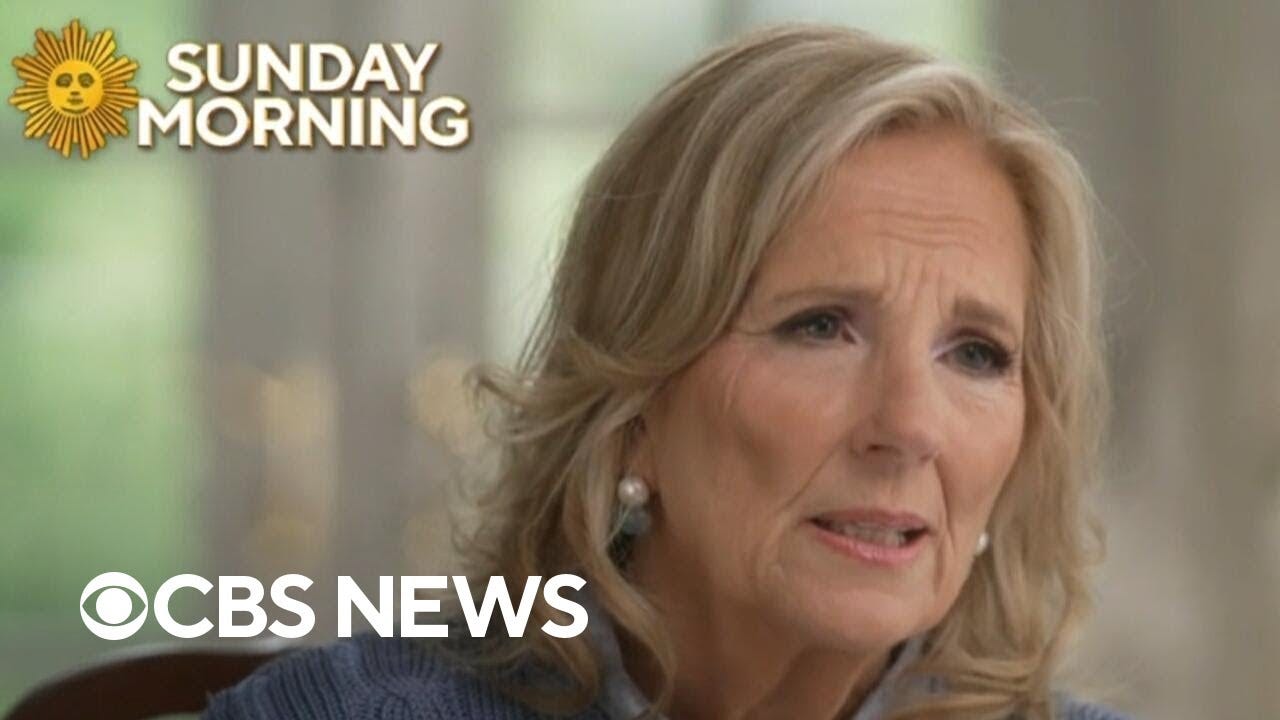
Jill Biden went on CBS News Sunday Morning this week to promote her new memoir and explain herself. Instead, she confirmed everything her critics have been saying for two years.
In an interview with Rita Braver, the former first lady said that when she watched her husband’s catastrophic June 2024 debate performance against Donald Trump, she was so alarmed she thought he might be having a stroke. “I was frightened,” she said, “because I had never ever seen Joe like that before or since. Never.”
She meant it as a humanizing moment. A wife scared for her husband. A family under impossible pressure. And taken on its own terms, maybe it is. But that’s not the context it lands in. The context is two years of questions about who knew what, when, and why nobody said anything.
The stroke comment didn’t make Jill Biden any more sympathetic and instead made her a witness against herself.
Here’s what the Bidens still don’t seem to grasp. The debate wasn’t the question that lingered. Americans watched it. They formed their own conclusions. Whether Joe Biden was experiencing serious cognitive decline or simply showing the wear of an extraordinarily demanding job is beside the point now. Voters processed that and moved on.
What they haven’t moved on from is the decision-making.
The controversy was never that an 81-year-old man looked old on television. Aging isn’t a scandal. The scandal was that the people closest to him treated every legitimate concern as a bad-faith attack. Democratic primary voters were telling pollsters for years that Biden was too old for another term. Party leaders heard it and proceeded anyway. None of it changed the plan.
Whether the Bidens were deliberately concealing the problem or gradually convincing themselves there wasn’t one is a question the historical record will eventually settle. In Washington, the two things are often less distinguishable than they seem. What’s harder to explain either way is why the people closest to him appeared so confident that their judgment was superior to what a clear majority of voters were telling them directly.
Few people were more influential in Biden’s inner circle than Jill Biden. She knew him best, saw him every day, and was publicly and repeatedly his most forceful defender. When questions about his fitness surfaced, she was often the one swatting them down. That’s not a supporting role.
What the book tour keeps revealing is how insulated her and her husband’s world had become.
The Bidens ran for decades on the idea that they were different from the Washington establishment, regular people who hadn’t lost touch with where they came from. Joe Biden’s Scranton roots were not fiction. But somewhere in fifty years of DC politics, something calcified. The people around them had careers that depended on the enterprise's continued existence. The feedback that reached the top was filtered, while honest brokers were painted as skeptics and shown the door.
The most revealing part of the interview may not have been the stroke comment itself. It was the apparent assumption that the comment would help change the unforgiving narrative.
Anyone outside the Biden orbit could have predicted exactly what would happen next. Fox News — the most-watched political media outlet in the country and one that spent two years arguing the Biden inner circle was engaged in a cover-up — treated it as confirmation of everything they had been saying. Whether that characterization is fair is almost beside the point. The reaction was entirely foreseeable. The fact that Jill Biden appears not to have foreseen it is itself evidence of how insulated that world had become. A politically sophisticated actor hears herself say “I thought he might be having a stroke” and immediately understands what the next morning looks like. That understanding apparently never came.
The most striking thing about the book tour is how genuinely surprised she seems that people are still upset. She appears to believe that if she can just tell the story one more time — what she saw, what she feared, what it felt like — Americans will finally understand.
But that’s not the question they’re asking.
Now, if this were a Republican family circling a visibly declining president while dismissing legitimate concerns as partisan attacks, the dominant media narrative would not be about the tragedy of misplaced loyalty. It would be about cynicism, manipulation, and the prioritizing of power over duty. That column would probably be right too. The difference here is that the available evidence points more clearly toward a family that convinced itself, and then couldn’t stop convincing itself, than toward people who knew and chose to hide it. If a memo surfaces tomorrow showing otherwise, this assessment changes. Until then, the more damning and more honest indictment is the one about judgment.
Jill Biden thinks Americans are still trying to understand what happened on debate night. They’re not. They watched it happen.
What they’re still trying to understand is what happened before it. The problem is that answering that question would require confronting a possibility the Bidens still seem unwilling to entertain: that the mistake wasn’t the debate. It was everything that led to it.