


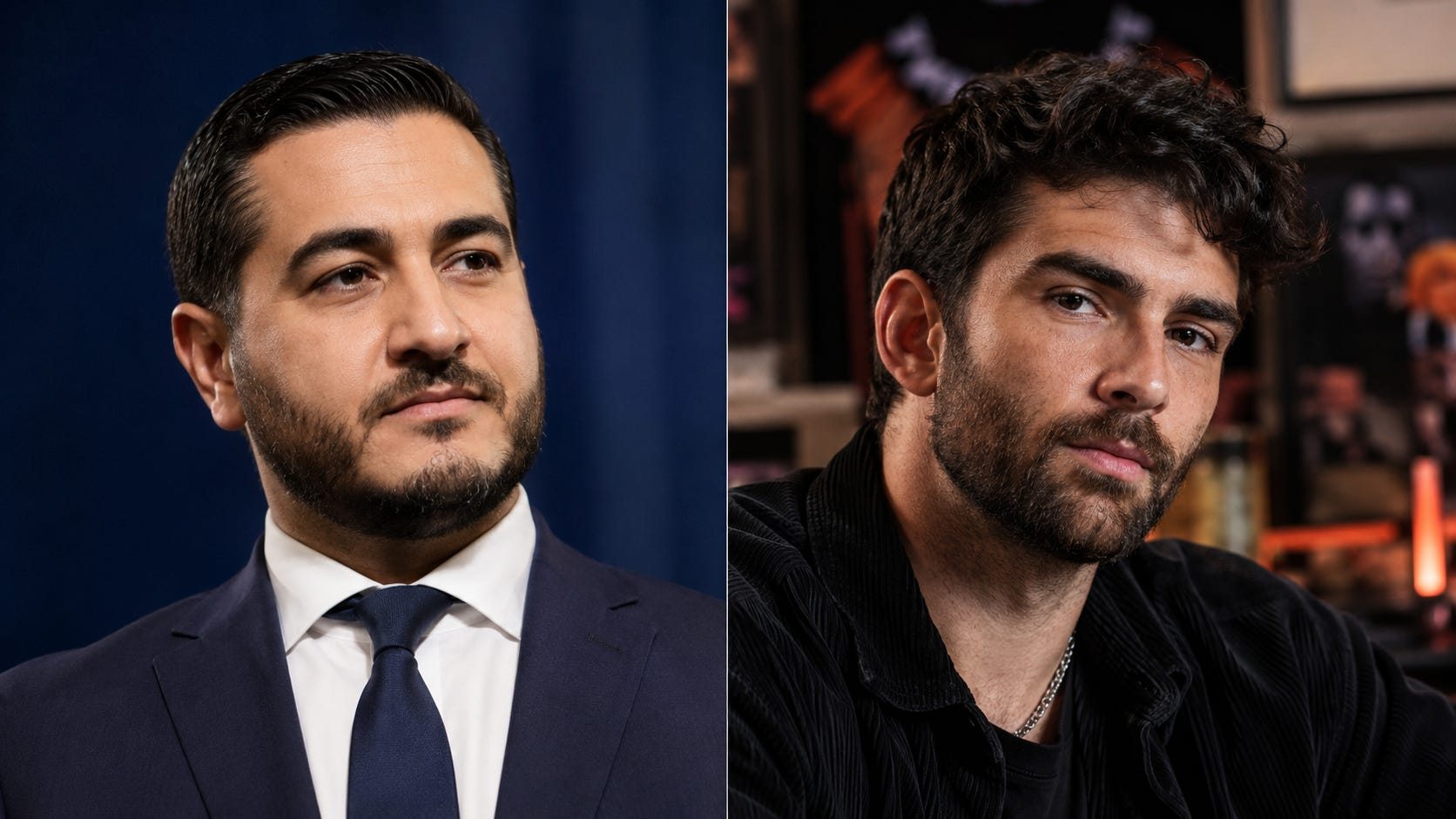
Nonstop Attacks on Hasan Piker Backfired and Helped El-Sayed Win the Michigan Primary
Mallory McMorrow spent the better part of spring demanding that her Democratic primary opponent Abdul El-Sayed cancel all campus rallies with Hasan Piker. She compared Piker to white supremacist turned MAGA apostate Nick Fuentes, declaring the alliance disqualified El-Sayed from the Michigan Senate race she was, at the time, leading in the polls.
In July she suspended her campaign. At 2 a.m. Wednesday morning, with no outlet having yet called the primary, she gave El-Sayed her full endorsement.
She was not alone in blasting El-Sayed’s symbiotic relationship with Piker, and that might be the bigger story here, or at least one being overlooked. The Democratic establishment spent five months trying to make Piker the primary primary reason nobody should, or even could, vote for El-Sayed. What they ended up creating was a remarkably valuable ad campaign for which El-Sayed didn’t pay a single penny.
This upended the entire value proposition of opposition research, which assumes negative attention is a damaging cost your opponent is forced to address. But in this brave new and slightly depressing attention economy? It became more of an in-kind campaign gift.
The pile-on wasn’t just establishment Dems in Michigan. El-Sayed’s main primary opponent, Haley Stevens, told Jewish Insider that Piker was “the exact opposite of someone I’d be campaigning with.” National media figures got involved as well. Third Way’s Matt Bennett called El-Sayed “a disgrace to the Democratic Party.” Piker and El-Sayed were featured in many cable news segments, and not just Fox News.
But El-Sayed refused to move away from his most controversial lightning-rod supporter in Piker. “This whole gotcha game, platform policing, cancel culture,” he told reporters, “I thought we were over it.” The joint rallies went ahead at the University of Michigan and Michigan State, attended by roughly 1,200 people across the two, and the argument about them ran from April into August.
In June, Republican pollster Steve Mitchell explained McMorrow’s eventual and rather rapid collapse, noting how El-Sayed had picked up “a large amount of unpaid media because of the endorsements by Senator Bernie Sanders and Piker.” Mitchell was talking about endorsements, but the intraparty attacks also seemed to exponentially multiply their value. Endorsements alone don’t generate five months of coverage on their own.
Getting attention is only the first step in a successful campaign. Candidates still need to convince voters to pull the lever. El Sayed’s opponents spent five months doing the expensive part for him: making sure everyone knew who he was. Credit where due: El Sayed proved to be an exceptional communicator and candidate who sold his pitch extremely well.
None of this is a case for Hasan Piker. I wrote in April that the press spent a year laundering his record, filing profiles about his physique and his cultural fluency while leaving out that he had called the sexual violence of October 7 analytically irrelevant and said it would be “fucking hilarious” if Orthodox Jews were killed fighting in Lebanon.
My argument then was that Democrats who treated him as an asset would eventually pay for it. Watching him with Donie O’Sullivan on CNN’s The Whole Story last weekend didn’t move me off that. He is a compelling television subject and a thoroughly cocksure one, telling O’Sullivan there is “0% chance” the 2028 Democratic nominee will be pro-Israel “in any way, shape or form.” People who have to win elections don’t talk like that.
I must also own up to getting the politics wrong in that column. I pointed to El-Sayed defending the Piker rally as proof the association was already costing Democrats. I was watching him collect free airtime and calling it damage. I was wrong!
Or I was early. Emerson had El-Sayed up fifteen the week before the vote, and he won by a point, so something broke late, and it may have been the attacks finally landing.
The attacks and smearing are surely not over now that the primary’s been settled. El-Sayed’s Republican opponent in the general election, Mike Rogers, said on Fox News Wednesday morning that he finds it “shocking that I’m going to go up against a guy who believes America deserved 9/11.” El-Sayed never said that. Piker did, in 2019, and later walked it back. Nobody on the curvy couch corrected him, because the made-up version is easier to run with anyway, because the accurate one requires stopping to explain.
Piker and El-Sayed are two different people, and a comparison between the two suits the Senate candidate. Piker keeps provoking with metaphorical grenades, like just two days before the vote he was in Milwaukee telling a crowd that “a Republican will never be elected in this state ever again once our movement is done.” Comparatively. El-Sayed looks like the most diplomatic statesman since Ben Franklin.
Either way, you can probably look up exactly what Stevens's allies spent trying to stop El-Sayed. But there is no number for what all that attention was worth to him. That's the part nobody in this business has figured out how to price. You can budget an attack down to the dollar and still have no idea what you just handed the guy you aimed it at.