


FX dropped all eight episodes of The Bear’s fifth and final season on Thursday night, and I could not resist binge-watching the whole thing in close to one sitting. Yes, the show has occasionally been uneven, but I love it, and like a lot of people, I went in with managed expectations, because history tells us that over time, the medium’s most beloved and acclaimed series have a long habit of fumbling the goodbye.
A warning before we go any further: I’m going to talk about how it ends. If you haven’t finished, bookmark this and come back when you have.
* * * * *
I’m surprised and delighted to report that The Bear absolutely stuck the landing. It paid off in the full, satisfying way that both the tortured staff of The Bear and an exhausted audience had earned. And it got there without once reaching for the cloying, everybody-hugs-it-out tropes that spoil most happy endings.
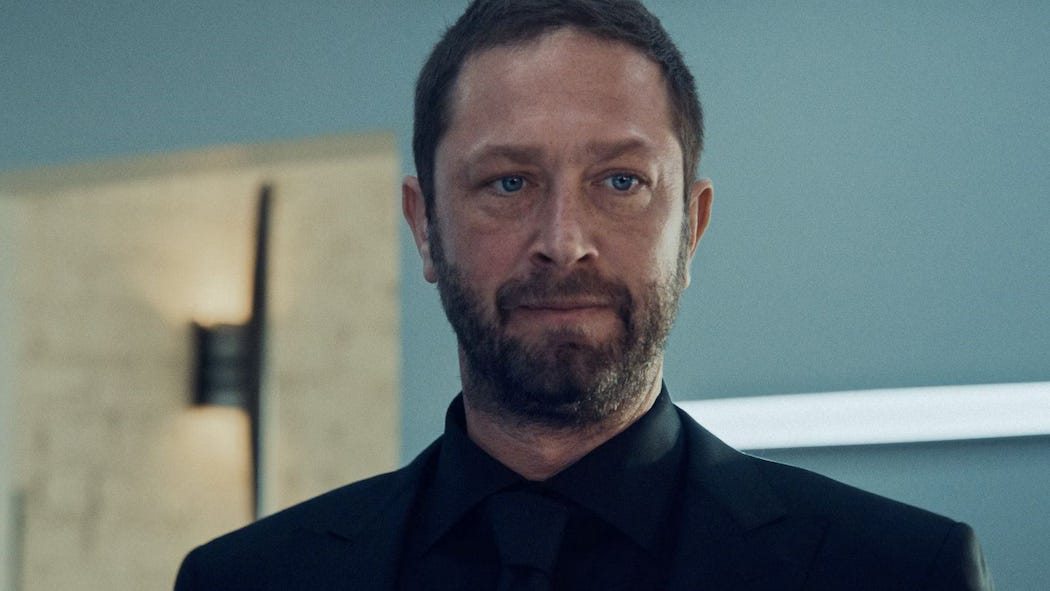
Here is what I came away with, and it isn’t just the warm glow of a good finale. Ebon Moss-Bachrach has spent five seasons giving as moving and emotionally satisfying an acting performance as the medium has ever produced, and if Cousin Richie isn’t the greatest character in the history of television, he’s certainly in the conversation.
I said what I said.
How the season pulls off that landing is the part worth slowing down for. The New York Times review found the right word for it, calling the season a heist, and the comparison is exact. The first seven episodes drop the crew into an impossible job on one brutal night: a flooded building, a gutted pantry, a Hans Zimmer score traded in for the show’s usual spot-on, Drag City-era Chicago indie rock, the soundtrack that makes the city sound as cool as it actually is.
They scheme and improvise their way through it in a manner that would impress Danny Ocean’s crew, with Richie as the inside man and the getaway driver of everyone’s sanity, the one keeping the crew’s nerve from cracking. You hold your breath even though you can see the ending coming, because the whole pleasure is in the execution. It works because the season is built almost entirely out of payoffs, five years of callbacks, old wounds, and running jokes all coming due at once. The finale itself is the exhale, a much-earned coda that ties off the loose threads honestly, the ending these people earned instead of the one a softer show would have gift-wrapped.
The single biggest reason they all push through a myriad of biblical-style maladies, the kind that come dangerously close to self-parody, is the spiritual motivation and foresight of Richie, the tortured soul of quiet desperation now running the front of the house, which, given his provenance, makes it all the more satisfying.
For years the easy read on Richie was that he was the screw-up, the loud cousin who peaked early and stuck around out of inertia. What the show keeps quietly insisting is that his challenges aren’t those of a typical fuck-up. He is simply too perceptive and sensitive to be comfortable anywhere that defies his reasoning and the moral code we watch him develop over the most beautiful character arc I can ever recall.
Everyone around him gets to move through the day half-awake, noticing only what touches them, and calls it peace. Richie never gets the option, so it all builds up with nowhere to go. The barking and the pacing and the picked fights are the overflow. Put him in a dining room, and he reads it faster than anyone standing in it, which table is about to turn, which cook is a comment away from quitting, what Carmy is feeling before Carmy feels it.
If you want the evidence, it has been on the record since season two. The much-celebrated “Forks” episode sent Richie to stage at a three-star restaurant, and he arrived treating the assignment as a sentence to serve. A man in his forties is assigned to a polishing rag by people half his age, and he is furious about it. What the episode pulls off over the next hour is the hardest thing a character arc can attempt. It changes a man completely without once letting you see the gears turn. He polishes the forks. The reservation book starts to matter to him. He learns one regular’s order, then why it matters, then that anticipating a stranger’s need before they think to voice it is the whole job and maybe the whole point. Every second counts becomes his scripture. By the time he is alone in his car, singing along to Taylor Swift at full volume with his whole chest, he has found the thing he is for.
It might be the best hour of television I have ever seen, and it works because Moss-Bachrach never lets you catch him acting. Richie does not decide to become a new man. He gets worn down into himself, one humiliating and clarifying day at a time, until the morning he presses his suit and means it.
The final season hinges on a scene that I think sits even higher in the Great Richie Canon™. The staff is demoralized, the building is coming apart in the rain, and the crucial make-or-break night looks lost before it starts. Richie recognizes the demoralized energy, overthinks his motivational speech following the family dinner, and completely whiffs, reaching for language big enough to meet the moment. Then he sets the page down and just talks to them in such an honest, bare, and convincing moment that the viewer comes away believing Moss-Bachrach came up with it on the fly.
The writing is exquisite and only outdone by the delivery. “We got nothing left to lose” becomes the remarkably effective rallying cry that resonates for anyone down on their luck, and even though you can see how it will play out, it is no less rewarding to watch it unfold. It brought me to tears, and a day later, I did something I almost never do. I went back and played the whole episode again just to reach those few minutes a second time.
To call the speech a tour de force feels unfair to everything that has ever been called a tour de force. What Moss-Bachrach does there turns a handful of defiant words into the most galvanizing moment in the series, because he lets you feel the entire arc compress into a single decision. The man who reads every room and manages every feeling finally stops managing, and says the plain thing, and means it.
What makes the run look this easy is the technical tightrope Moss-Bachrach walks every episode across five seasons. In lesser hands, Richie stays the caricature we meet in the pilot, the exhausting, loud-mouthed neighborhood anchor dragging the ship down with his unhinged bullshit. Moss-Bachrach plays him instead with a raw vulnerability he never overplays, the kind you can practically see vibrating under his skin. What he gave Richie was gravity, real intellectual and emotional heft, more than any redemption arc could account for on its own. He took a guy who first made you want to change the channel and turned his face into the place where the show’s entire emotional stakes came to live. It is a clinic in controlled chaos, in how to play a man bleeding out in public while pretending he is just loud.
By the end I understood that Richie had been working on me the way a certain kind of character always does. He belongs to a small family of them: Mark Ruffalo’s Terry in Kenneth Lonergan’s You Can Count on Me, the wayward brother who can’t make an ordinary life sit right on him, or Renate Reinsve’s Nora in Joachim Trier’s Sentimental Value, all restless energy under a mask of outcast cool. The culture writes these people off as flakes or drifters. The actors who play them know better, that they see what everyone else misses, and that it wears on them. They are the opposite of blissfully ignorant, and that is the part that has always gotten to me, across years of watching for it.
What The Bear understood, and almost nothing else on television even reaches for, is a truth about one very specific kind of person: the one whose sensitivity gets read as a defect right up until it finds somewhere to land and becomes the most valuable thing in the room.
That is Richie’s whole arc, the cousin nobody knew how to manage becoming the man holding the front of the house together. Nobody on television has ever played that the way Ebon Moss-Bachrach plays it. He is the best character the medium has ever given us, and my favorite I have ever watched.
Again, I said what I said.