


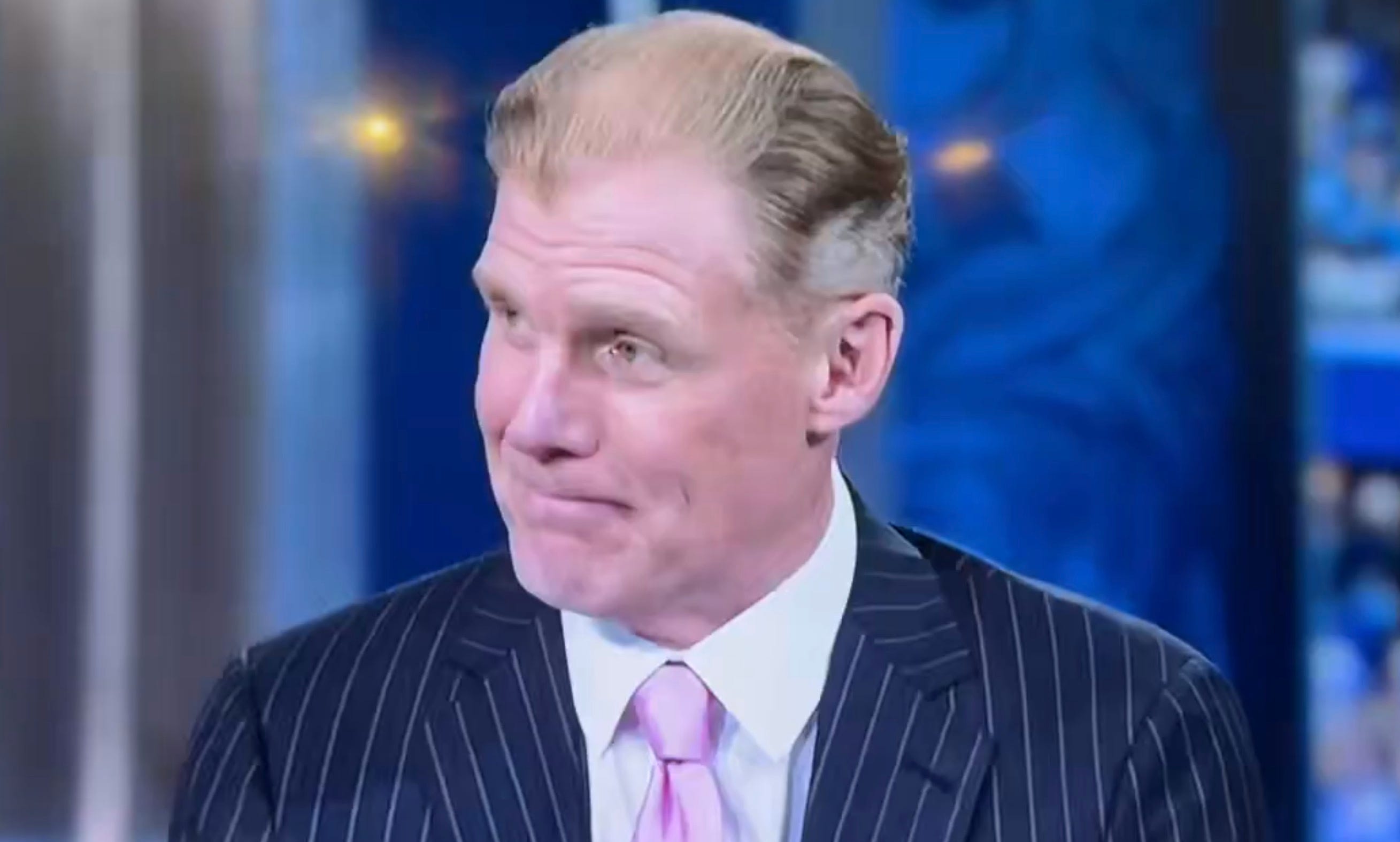
The world came to America fully expecting to meet the ugly Americans it had repeatedly been told about. Something magical happened instead. The world saw Boston warmly adopt Scotland, Lawrence, Kansas, embrace Algeria, and a host nation that not only behaved itself but also operated effortlessly and embraced the spirit of a global sporting event.
Many showed up ready to find arrogance and instead discovered welcoming strangers. Americans spent two weeks rooting for countries they couldn’t find on a map a month before. American hospitality became an impossible global narrative. The lazy stereotype mostly failed.
Then Fox Sports put Alexi Lalas on television, and everyone relaxed. There he was.
For years, hating Lalas felt like a niche American soccer pastime. Message boards. USMNT Twitter. Sports bars where somebody inevitably asked, “How the hell is this guy still on television!?” It was domestic business.
The World Cup changed that context entirely.
Fox Sports built a world-class studio show. Then they added Alexi Lalas, a man who appears convinced the sport peaked in 1994. He is to global football analysis what Nickelback is to grunge rock.
The network spent years and millions building a studio show that could stand alongside the best soccer coverage in the world. Adding Alexi Lalas to that studio desk accidentally turned an American problem into a global one.
For the first time, viewers weren’t judging Lalas against American soccer television. They were judging him against the best soccer television in the world. And they’d just spent two weeks discovering that America wasn’t what they expected.
Lalas delivers meaningless observations with absolute certainty. He’s in love with how he sounds. Not what he’s saying…how he sounds. There’s a difference.
He is the ugly American whom the world immediately found loathesome. The stereotype of wearing an American flag pin. The boomer at the karaoke bar who can’t hear how much everyone wishes he would stop. Corporate arrogance dressed in soccer analysis. And because everyone else on that desk is genuinely good at what they do, his incompetence became impossible to ignore.
During a halftime recap of France versus Senegal, Lalas watched Ismaïla Sarr spray a chance over the crossbar and responded the only way he knows how: “Sarr. Over the bar. Hit it far.” It was meaningless. It was dumb. It was loud. In short, it was Lalas.
Henry watched this happen. Then he laughed and shook his head, repeating “Sarr over the bar” like he was congratulating a five-year-old for rhyming cat with mat.
That’s the whole dynamic right there.
Henry breaks down what’s happening on the field. You watch him and learn something. Lowe listens and asks real questions. Zlatan played at the highest level for twenty years. He knows what he’s talking about. Then there’s Lalas with his Power Rankings segment, telling people: “If you don’t like them, get your own Power Rankings.”
It isn’t interesting or performative arrogance (like Zlatan.) It was exhausting.
The real problem is how incurious he is. Not uninformed. Incurious. He doesn’t wonder about anything. He just declares what things mean and moves on. Asking questions would require listening, and listening would require stepping back from the sound of his own voice long enough to hear how dopey it all is.
Zlatan had the perfect line after watching Lalas bungle another segment. When Lalas came back to the desk, Zlatan nodded at Lowe and Henry and said, “Their outfits are well put together.” Then turning to Lalas: “We can discuss.” Lalas smiled but didn’t laugh. Zlatan had to add, “It’s all love. It’s all love.”
When the USMNT played Australia, Lalas closed his segment the way he always does: “America wants to celebrate America and this team is giving America a reason to celebrate America, and man oh man, ain’t that America?” That’s not analysis. That’s patriotic bombast. The world watching from home noticed the difference.
That’s why it went global. It’s not politics. It’s not controversial.
The evidence is everywhere.
When Lalas disappeared from Fox’s main studio show for a day, Zlatan Ibrahimović responded to the news with a simple question: “Who?” Later he looked directly into the camera and added, “America, you’re welcome.” The clip became a story unto itself.
Aaron Timms wrote for The Guardian about Thierry Henry dismantling Lalas on air, calling it one of the tournament’s best side stories. Andrew Marchand at The Athletic said Fox should lean harder on Lowe and Henry and called Lalas “one of the most insufferable analysts in American TV sports history.”
Critics dislike everyone. That’s not the story. The story is how consistent this reaction has been. American soccer fans have complained about him for years. British writers discovered him and reached the same conclusion. A Swedish superstar showed up, spent a week sitting next to him, and started making jokes.
The world speed-ran what American soccer fans have been arguing about since message boards required dial-up internet.
The best moment was simple and brutal. Henry was in an on-set kickaround segment. He passed a ball with one foot, then dragged it away with the other. A guy with 96 caps for the United States just danced with thin air.
That’s what this entire World Cup has been.
The World Cup creates moments of international understanding. Usually shared joy. Sometimes shared grief. This year it created something else. Boston found Scotland. Lawrence found Algeria. And the rest of the world finally met Alexi Lalas.
The remarkable part wasn’t that the world met him. The remarkable part was how quickly it reached the same conclusion American soccer fans reached years ago.