


Twenty-four hours after Trump signed the deal that ended the Iran war, it was still the biggest story in American politics.
But the fight about it was effectively over.
The deal had taken nearly four months to reach. It had cost thirteen American lives. A single news cycle after the signing, everyone was still covering it, and no one had anything left to argue about.
The deal had just pulled off something close to impossible in American politics. It got Republicans and Democrats, hawks and doves, and even the partisan media extremists to agree.
Nearly all of them agreed it was bad.
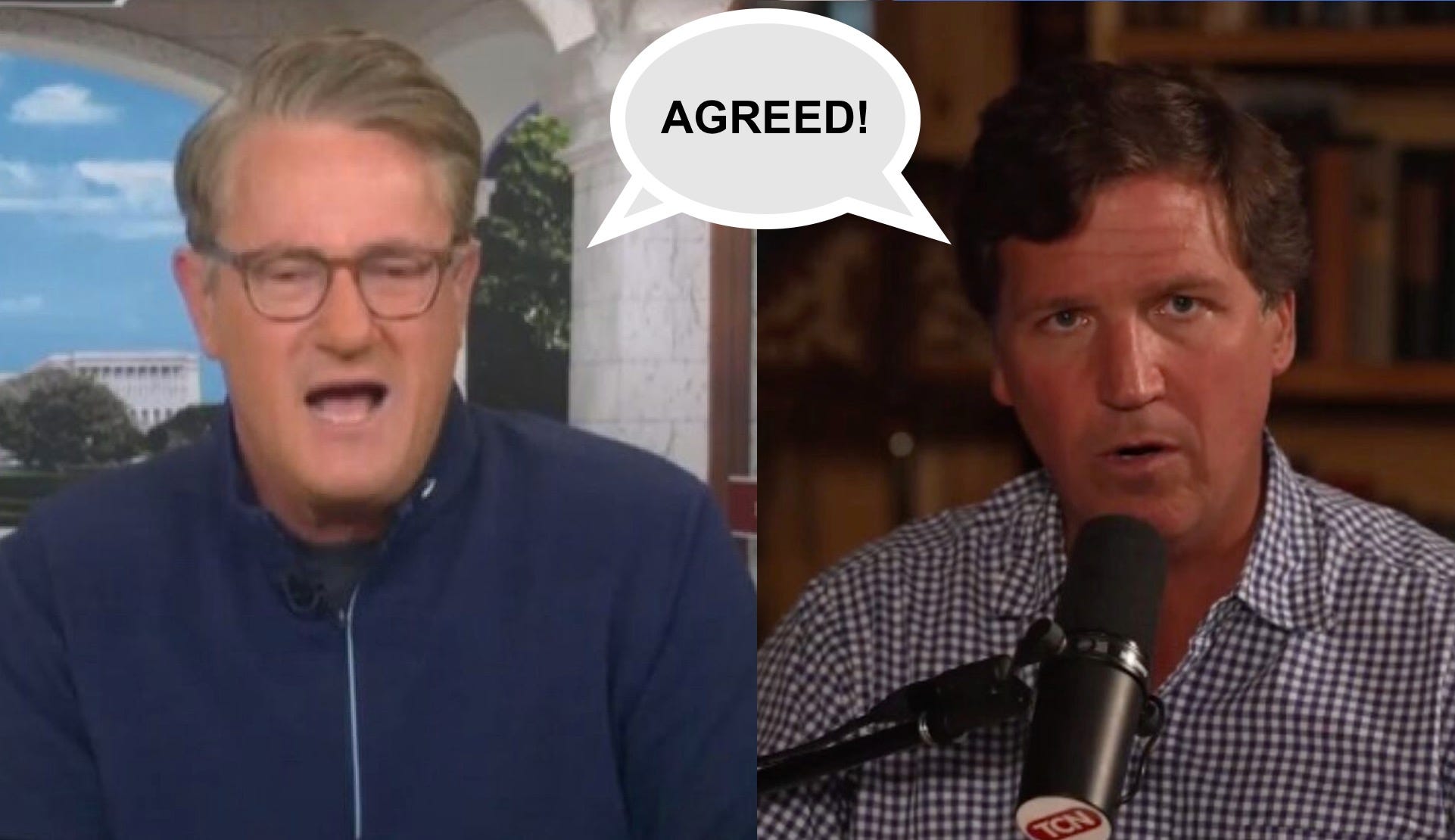
The hawks called it appeasement. Bill Cassidy said Reagan was rolling over in his grave. Nikki Haley said Iran won. The Wall Street Journal editorial board ran “Trump Stages an Iran Retreat.” Then the same verdict came from the left. Joe Scarborough called it a complete capitulation and said we lost the war. Chris Murphy said Iran won and Trump had surrendered.
Even the people cheering agreed on what had happened. Tucker Carlson, who thought the war should never have been fought, called the ending overdue. But he described the same outcome the hawks did: America had pulled back. He just thought that was good news.
The remarkable thing wasn’t that everyone hated the deal. The remarkable thing was how quickly everyone stopped arguing about it.
The verdict still split. The facts didn’t. When Bill Cassidy and Tucker Carlson describe the same outcome, the disagreement that powers the coverage is gone.
Narrative Prism is a data-driven software platform that I helped create that tracks how narrative frames move across the partisan ecosystems, which ones are crossing over, and which ones are stalling out. On Thursday, it flagged exactly one narrative as Going Mainstream: that Trump had signed a weak deal and surrendered American leverage. Going Mainstream is the system’s top signal, the moment a frame breaks out of its home ecosystem, and the entire spectrum starts carrying it. It is supposed to be the prize.
And then the story faded.
Not the topic. The topic is still very much everywhere. What died was the argument underneath it.
The narrative that had crossed every ecosystem was down to four sources in the previous 24 hours, from about thirty the day before. Its velocity read zero. It reached the whole spectrum and stopped moving in the same cycle.
While the Iran frame stalled, the stories gaining velocity were all new and all violent. Ukrainian drone strikes on Russian oil refineries, nine sources from a standing start. The Gaza ceasefire collapse, seven. Israel and Lebanon, five. None of them was a bigger story than Iran. But all of them were moving, and Iran wasn’t.
The deal had saturated the system. There was nobody left to convince and nowhere left to spread. The fresh wars even ran hotter on Prism’s heat scale, 0.56, 0.63, and 0.68 against the deal’s 0.49, because each one still had a side somebody wanted to defend. The Iran deal didn’t.
You could watch it the next morning. The first hour of all three flagship cable news morning shows led with the deal, and all three were done with it inside the hour, because there was nothing to do with a verdict everyone already shared. Fox & Friends gave it a straight rundown, let Brian Kilmeade read the Journal’s takedown out loud, and pivoted to Graham Platner, Zohran Mamdani, and the Knicks parade. CNN This Morning ran its Republican-revolt segment and spent much of the rest of the hour on the Obama Center and a Taylor Swift wedding rumor. Morning Joe opened on the deal, compared it to Versailles, and moved on to the Fed.
Three audiences that agree on nothing made the same call.
After the lead segment, a deal that took nearly four months and thirteen American lives gave way to a parade, a library opening, and a celebrity wedding rumor. By every measure, it was exactly as consequential as it had been the day before. The conversation moved on anyway, because the fight was over.
But cable news, like all of political media, doesn’t run on importance. It runs on conflict.
The stories that survive are the ones where somebody is still willing to defend the villain. The Bill Pulte and FISA fight over the midterm machinery ran for hours on MS NOW and never aired on Fox, because the two sides still disagree about whether it’s a scandal. The Vance succession intrigue kept moving because the conflict is built in. Mamdani and socialism kept running because Fox has a villain it can sell. Ukraine, Gaza, and Lebanon kept climbing because each one comes with a fresh enemy.
The Iran deal has run out of defenders. Once the hawks and the doves and the Democrats and the editorial boards all landed on the same verdict, there was no one left to argue with, and a story nobody will argue about is a story the system cannot use.
Trump understood the problem better than anyone, because he had the most to lose from it. A few hours after signing, he was already trying to restart the fight, posting that his critics were jealous, bad, or stupid. CNN read it on air. A man who built an entire political career on having an enemy had just signed his enemy away, and he was trying to manufacture a new one in real time, because a story he can’t fight is a story he can’t win.
Strip out the proper nouns and you are left with a rule that should bother anyone who counts on the press to sort out what’s true.
And the surest way to kill a true story is to get everyone to agree that it’s true.