


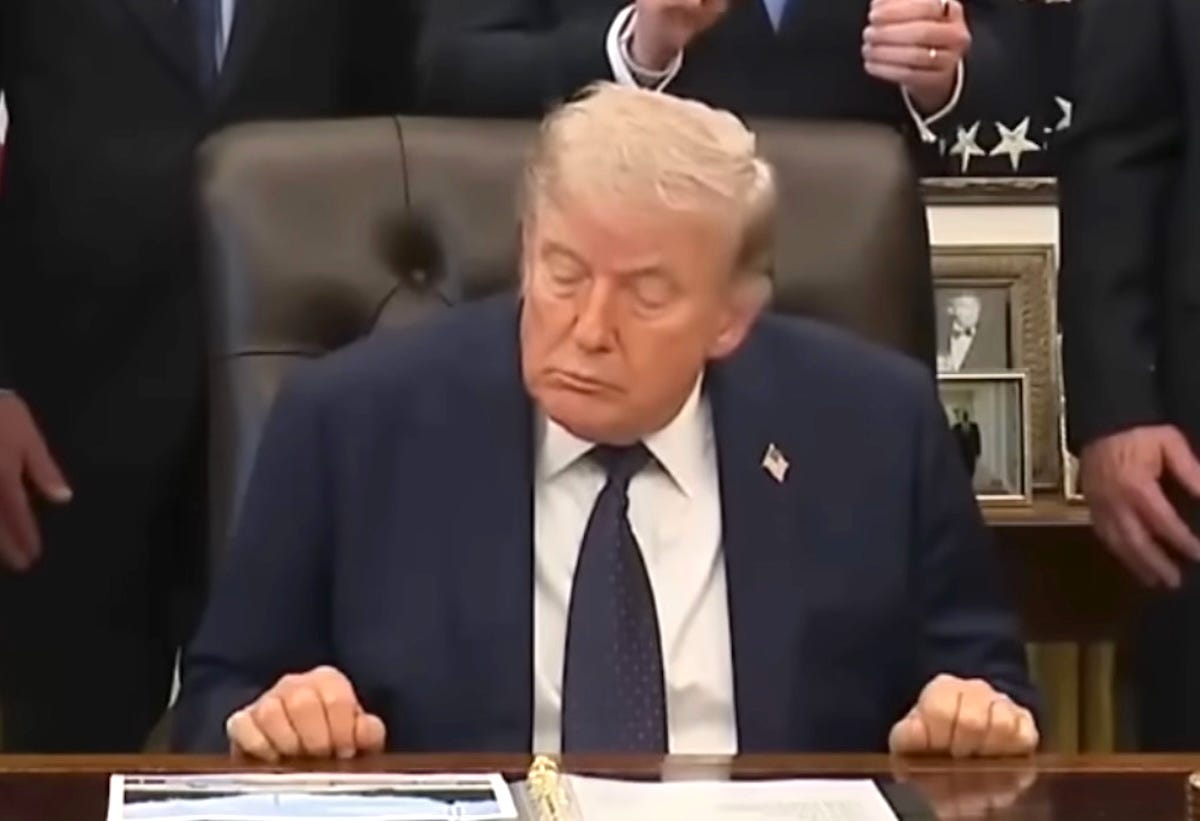
On Monday, Donald Trump told CNBC’s Eamon Javers that the Iran talks had gotten very boring. He said he couldn’t care less whether they continued. Presidents don’t usually talk about active wars that way. Victory, danger, sacrifice, progress, setbacks — that’s the vocabulary. Boredom is what people feel when they think the important part is already over.
The Iran war has entered its political endgame. Washington’s behavior is the evidence.
Nobody can predict how this ends. But the people closest to it are behaving like people who think they know. The evidence isn’t on the battlefield — the Strait is still closed, the regime is still standing, no deal is signed. The evidence is in how they're acting.
Every major actor in this story has stopped arguing about what the war should accomplish and started maneuvering around what it already did. That's what Washington looks like when people start obsessing over what comes after.
That shift happened without anyone announcing it.
Marco Rubio told the Senate on Tuesday that the war is over. A House Democrat asked the follow-up: if the war is over, who won? Rubio answered something else. He walked through what Operation Epic Fury had accomplished militarily, redefined “war” as “hostilities,” and moved on.
Rubio is one of the most experienced political communicators in Washington. He heard what was asked. He understood what answering it would require.
The answer to “who won?” determines who gets credit, who gets blamed, and who has to explain what comes next. A clearly successful war can answer that without much trouble. A clearly failed war can answer it, even painfully. A war suspended somewhere in the middle — Strait still closed, regime still standing, peace deal somewhere down the road — cannot. There is no answer that doesn’t pin something on somebody. So Rubio answered a different question.
Trump needs the story to close on his terms. Victory closes it. A negotiated exit that can be credibly sold as a win closes it. When he described the ceasefire this week as “when you’re shooting in a more moderate manner,” he wasn’t being careless. That is not the language of a president managing an active conflict. It is the language of a president trying to exit one.
The same morning Trump told CNBC he was bored, Fox News was telling its audience a deal was coming by the weekend. Two actors, same war, same morning — one performing detachment for an audience of investors, one performing victory for an audience that needs the strength frame to hold through November. Not preparing viewers for escalation. Not preparing them for sacrifice. Preparing them for a conclusion.
Congressional Republicans are moving at a different speed toward the same destination. Four of them voted with Democrats this week to invoke the War Powers Act. Ashley Hinson, running for an Iowa Senate seat with Trump’s endorsement, told a private meeting the war was turning into a liability. Thom Tillis said whoever is running things at the White House should leave. These are not people who turned against the war on principle. They are people repositioning themselves ahead of a reckoning they believe is coming.
Iran’s position is the most clarifying. The regime doesn’t need a domestic political narrative around how this ends. It needs to survive long enough for the story to close on someone else’s terms — which is a reasonable strategy only if you believe the political will on the other side is running out.
None of these people are coordinating. Yet the pattern is unmistakable.
The clearest sign the Iran war is entering its final chapter isn’t on the battlefield. It’s in Washington, where the argument has already shifted from what America should do next to who will be left holding responsibility for what it already did.
Tariffs, Epstein, ICE and Iran are all part of the Kayfabe script.