


Trump’s Most Loyal Defenders Are Starting to Deliver Bad News
For nearly a decade, the people responsible for maintaining Donald Trump’s political coalition have been remarkably consistent about one thing: they don’t say the uncomfortable thing out loud.
When something goes wrong, they find the frame that makes it look like strategy. When a prediction fails, they explain why the failure is actually setup for something bigger. They absorb what would damage other coalitions and turn it into momentum.
That discipline — more than any policy, more than any rally, more than Trump’s own considerable instincts — is a big part of why he’s still standing.
Which is why this week was worth paying attention to.
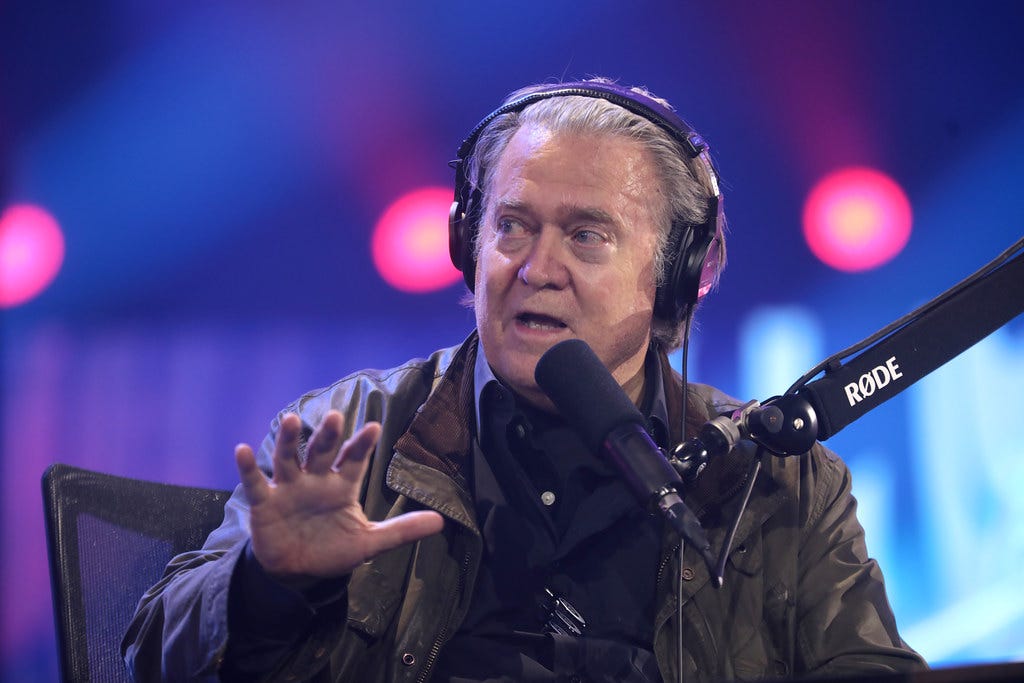
Steve Bannon’s job has always been selling confidence. For years he’s told his audience that history is moving their way and that Trump is the vehicle carrying it there.
This week he was on War Room telling his audience that his best pollsters are showing a massive lack of enthusiasm among the base, that people are just not feeling it, and that Republicans are probably going to lose the Senate.
That’s not the message Bannon usually delivers. It’s not close to it.
Then there’s Matt Walsh, who welcomed Pam Bondi’s firing as long overdue and cited the administration’s bungled handling of the Epstein files.
The easiest move in MAGA media is to blame the press, the deep state, Democrats, or the bureaucracy. Walsh blamed the administration.
That’s what makes it noteworthy.
And then there’s Batya Ungar-Sargon, who has built a career arguing that elite media condescends to Trump voters and fails to take their economic lives seriously.
Her credibility rests on her relationship with the people she speaks for.
This week, she delivered a message to the president that the White House narrative has no clean answer for:
Your voters are broke.
They’re skipping meals.
They’re buying canned chicken.
They’re not living inside the victory story you’re telling.
Three examples.
Same direction.
Same week.
It’s worth noting that none of this emerged from nowhere. Tucker Carlson, Marjorie Taylor Greene, and Megyn Kelly have all publicly broken with the Trump administration on major issues over the past several months.
The question isn’t whether Trump has critics inside the coalition. He’s had those for a while.
The question is whether the bleeding has been stanched.
Bannon, Walsh, and Ungar-Sargon suggest it hasn’t.
What often makes a coalition durable isn’t the voters themselves. It’s the people those voters trust to explain what’s happening.
When those people stop explaining away problems and start describing them instead, something has changed.
Maybe it means nothing.
Trump has survived predictions of his political demise more times than anyone can count, and his base has remained loyal through things that would have shattered most political coalitions.
But something specific happened this week that doesn’t happen often in this world.
The people whose job is to project confidence instead have pivoted to doubt.
Not from critics. Not from the press. Not from his opponents.
From people who are still fundamentally defending him.
Political coalitions don’t announce when they’re in trouble. They reveal it through the people their members trust most.
This week, several of those people delivered bad news.
The heel turn…