


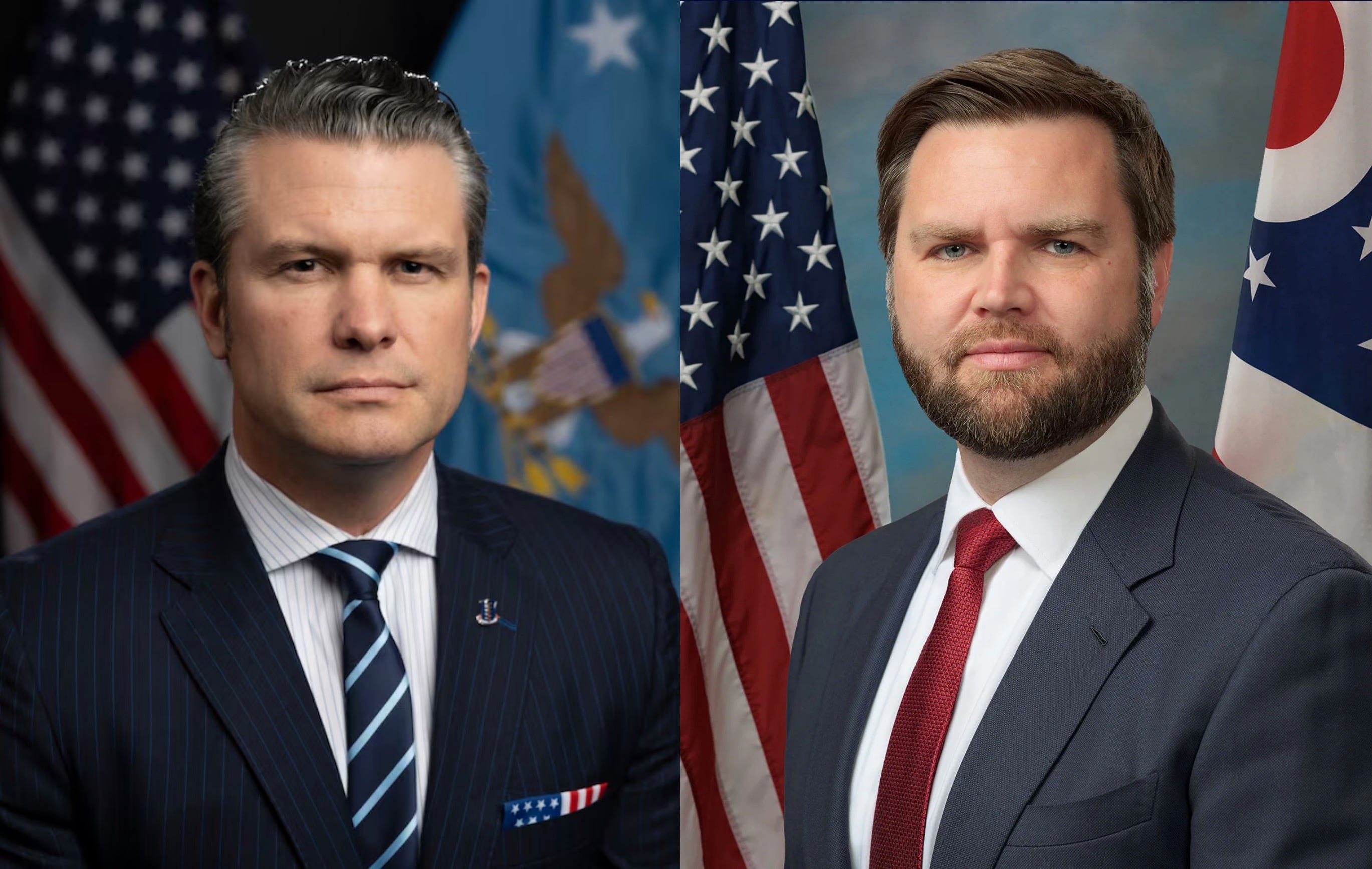
Bret Baier's candid reaction to Jennifer Griffin's report on Army Secretary Dan Driscoll's resignation was every bit as telling as the resignation itself.
Minutes after the Wall Street Journal confirmed he story, Griffin shared details on Monday’s Special Report and explained how Driscoll was an ally of Vice President JD Vance, and Driscoll quit after months of fighting with Secretary of War (and former Fox News co-host) Pete Hegseth, particularly over firings of generals. Griffin even noted that the Army is currently suffering a “brain drain” under Hegseth’s leadership.
Baier seemed less surprised by the resignation and more by the timing, saying he “thought he was gonna stay until after the midterms and run, maybe, Vice President Vance’s campaign.” What Baier revealed here is not that he knew that Driscoll was close to Vance; it’s that the prospect of the sitting Army Secretary becoming Vance’s eventual campaign manager for a run for the White House was sufficiently conventional wisdom for Baier to blurt it out loud, while the resignation was still breaking.
First, some background. Driscoll resigned Monday after Hegseth fired Army Chief of Staff Randy George in April and fired others since. Axios reported Tuesday morning that Hegseth had become “suspicious and paranoid” toward Driscoll, partly because of the Vance relationship (they were classmates together at Yale Law). CNN’s Kristen Holmes reported that Hegseth resented anyone with a White House channel that didn’t run through him. It was also reported that Driscoll personally met with Donald Trump before resigning and that the White House asked him to stay on through the midterms, though he declined.
It’s rare for an Army Secretary to publicly resign, ostensibly in protest of Pentagon leadership, but to do so during a hot war that, by most objective measures, is not going to plan? That’s a stunning development. And it currently leaves the US Army with no Senate-confirmed leader, civilian or uniformed. The acting chief, Gen. Christopher LaNeve, was Hegseth’s own senior military aide. Deputy Undersecretary Dave Fitzgerald is expected to follow Driscoll out this week, and Hegseth has reportedly floated Sean Parnell, his spokesman, for the job. The Iran War has entered its seventh month, after it was thought by the Trump administration to be a four- to six-week endeavor.
Hegseth may have been paranoid about Driscoll, but that doesn't mean the threat he sensed was entirely imagined. His Army Secretary had an independent relationship with the White House, was one of Vance's closest allies in the administration, and was already being discussed on Fox News as a future Vance campaign operative. You don't have to believe Driscoll was plotting against Hegseth to see the potential conflict between Vance and Hegseth. These two potential presidential operatives had overlapping territory within the same administration, but only one controlled the Pentagon.
Why does this suddenly seem so obvious? Because just last month Pete Hegseth traveled to Iowa in what sure looked like an early campaign trip, or at least an excursion to get a lay of the land. Thats the Secretary of War finding time to go to Iowa while his military is engaged with enemy combatants in Iran. During a CNN panel Tuesday morning, there was mention of “the drip, drip, drip of Hegseth talking about running for president.” When Trump was asked about it during a Monday Oval Office gaggle, he noted it was “very early” and could have ended the story there, but instead praised Hegseth and called the timing premature rather than naming Vance his heir. Hegseth has denied the speculation of a White House bid because, of course, he did.
Meanwhile, look at what Vance was doing Monday evening: he was behind closed doors with the Republican Jewish Coalition at the Venetian in Las Vegas, a room full of donors who have long wanted him to cut ties with Tucker Carlson. (He didn’t). He condemned Nick Fuentes by name (”nothing but hate in his heart”), defended Joe Rogan by name, and never got around to Carlson at all. Earlier that day in Michigan, he weighed in on the data center backlash that Trump had just chalked up to people who want to be “backwards and poor.” Vance’s take was sharply different from the president’s, saying “Probably 99% of the backlash to data centers has come in areas where building a data center means higher utility and higher electricity.”
It’s worth noticing how Vance doesn’t directly contradict Trump and instead translates Trump into something the next Republican coalition (and its next nominee?) can run on. He isn’t strictly breaking with the president on any of this. Instead, he’s deciding which political alliances and factions can survive Trump and telling each one he understands them. That’s coalition management, and any vice president with presidential ambitions would be doing the same thing. Which is what makes Driscoll different. He wasn't a faction to be managed, but was Vance’s guy inside the Pentagon.
And where is Trump in all this? Apparently out of the loop, if The Atlantic has it right. Jonathan Lemire walked through the reporting on Morning Joe Tuesday: Driscoll took his concerns about the Army straight to the president, and Trump seemed surprised to hear them, which is how Lemire came to describe Hegseth as “the only conduit of real information from the Pentagon.” The Atlantic also reported that Trump has privately expressed concern about the firings. In other words, the president learned what’s going on inside his Army from the guy who had just lost the fight over it.
Palace intrigue? I’d argue there is a much bigger story at play here. Trump has spent a decade defining himself as the dominant primordial beast within the GOP apparatus. He’s turned the Republican Party into his own cult of personality, where every political relationship that matters goes only to him. But this approach only works while he’s in power, or until somebody wonders who comes next. For ten years, there has been nobody else in the party who has had that power, and Trump’s had zero reason to cede any of it while he’s still in the White House. And a president who doesn’t signal a clear successor ends up with two of his senior aides fighting inside his own administration. Sure, it’s entertaining for the political obsessives, and very much in line with the kayfabe political theater, but it sure feels like Driscoll is just the first casualty.
The fact that this is happening during a disastrous Iran War reveals the priorities of the administration’s senior leadership in a pretty on-the-nose manner.
Now there is a boring version of the story that I would be remiss to leave out. Perhaps Hegseth and Driscoll had a real policy fight over the Army Transformation Initiative. Cutting the Apache, the Booker, the Gray Eagle, merging Futures Command into Training and Doctrine. Driscoll was reportedly a “drone guy.” Ambitious people clash all the time, and Hegseth is well within his rights to manage his team how he wants. And Vance is doing what every VP does. Hegseth’s camp would call the purge accountability. Some of that is true. None of it explains why Bret Baier’s first thought was about Vance’s presidential campaign.
So the next and most important development in this twisted saga to watch is the appointment of Driscoll’s replacement. Hegseth has already floated Sean Parnell, his own spokesman, for the job. If Parnell or some other Hegseth loyalist slides into that chair without a fight, Vance has lost more than an old friend from Yale. He’s lost his one real foothold inside the Army to a man who keeps getting mentioned for the job Vance wants. If Vance does fight it, then what everyone in Washington has been politely calling Pentagon dysfunction gets a lot easier to name.
Nobody’s supposed to be running for president until after the midterms, and yet here we are. It sure seems like Pete Hegseth won the first primary battle of 2028. It remains to be seen whether he can win the war.