


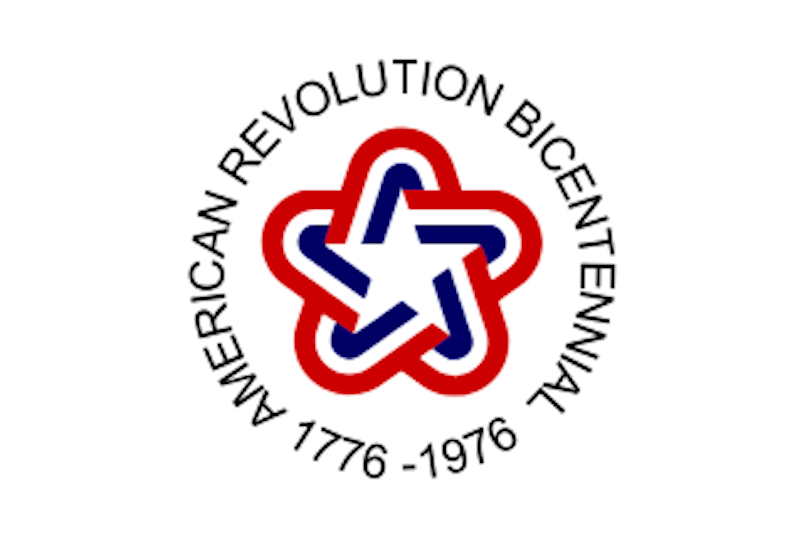
I was nine years old when America turned 200.
Like most nine-year-olds, I wasn’t exactly obsessed with the news. But growing up in a news-obsessed household? I was aware.
I knew who the president was. I knew Vietnam had happened and it wasn’t a win. I knew all about Watergate and Nixon’s resignation, which left a lasting impression. My parents did not care for Nixon, but when he resigned, they removed a “Don’t Blame Me I Voted for McGovern” bumper sticker because it was no longer appropriate and the nation needed to unite.
But mostly I cared about skateboarding, the comics page, and Gilligan’s Island or Brady Bunch reruns, or whatever was on one of the thirteen channels we’d just received after finally getting cable in Hutchinson, Kansas.
Still, the Bicentennial was impossible to ignore. My hometown organized a contest where residents could paint fire hydrants in Bicentennial themes. My best friend Steve Sprinkie and I spent the better part of a week planning and painting ours, naively thinking we had a shot at winning the fifty-dollar prize.
We didn’t.
But fifty years later, I still vividly remember the excitement. Not the disappointment of losing. The excitement of being invited to participate in something that felt like it belonged to us, even if it resolved into the shared experience of watching the tall ships from around the world congregated in New York City’s harbor next to the Statue of Liberty.
Before I go further, I need to interrogate that feeling a little. I was nine. Nine-year-olds are not reliable narrators of civic health. I didn’t understand the nuances of what my parents were actually arguing about at dinner. My father was a Rockefeller Republican. My mother is an academic Democrat. They disagreed on some issues, but mostly shared an intellectual curiosity and a respect for each other that seems increasingly rare.
Nixon, the Equal Rights Amendment, Vietnam, inflation, corruption, a country that seemed to be perpetually arguing with itself. Looking back, 1976 should not feel idyllic. Watergate had just happened. The Vietnam War had ended only a year earlier. Assassinations from the previous decade still cast a long shadow over public life. The economy was beginning to sputter. Political trust was near historic lows. It wasn’t a great time for the good old US of A.
So maybe I’m just romanticizing a summer from childhood. Maybe the fire hydrant contest is doing more work in my memory than it deserves.
Except I don’t think that’s quite it.
Now consider what America’s 250th birthday actually looks like. The official White House-adjacent celebration, branded as the Freedom 250 concert series, announced its lineup and had it largely collapse within 24 hours. Five of the nine named acts withdrew almost immediately. Their reasons were strikingly similar. Martina McBride said she had been told it was a nonpartisan event celebrating America and that “turned out to be misleading.” Young MC said the artists “were never told about any political involvement.” Bret Michaels said what was originally described to him had “evolved into something much more divisive” than what he had agreed to. They weren’t objecting to America’s birthday. They were objecting to what the birthday had already been turned into before they even showed up.
On the other side of the dial, MS NOW anchor Ali Velshi told his audience he feels “deep unease” about the 250th and referred to the United States as a “so-called democracy.” His criticisms of the country are not unreasonable. Every generation has had a version of that list, and most of them were right. My mom had her own version of it at our dinner table in 1976. The difference is that she could hold the criticism and the celebration simultaneously, as most Americans once did, as a matter of course. What Velshi’s comments suggest is a different relationship: before I celebrate, I need to first establish my moral distance from the thing being celebrated. That’s not the same as criticism. It’s a posture. And it’s worth examining not because Velshi is uniquely guilty of it, but because he’s reflecting something that has become genuinely widespread on the cultural left.
The same dynamic is expressing itself in opposite directions, and before you ask -- yes, both sides. Trump can’t just show up to America’s birthday. He has to own it, put his name on it, run it through his political identity like everything else. The celebration becomes the brand. Velshi can’t just show up either. He has to let you know first where he stands, what he’s willing to endorse, how much moral distance he’s maintaining from the thing being celebrated. One plants a flag. The other files a disclaimer. In both cases, the event stops being the point.
The artists who bailed from Freedom 250 were trying to do something neither Trump nor Velshi could manage: just show up.
I don’t think this is because Americans are more cynical than they used to be, or more divided, though they certainly are. The problem is more structural than that and, in some ways, much harder to fix.
In 1976, the people with the most incentive to claim the Bicentennial were mostly civic leaders at the local or community level. Your mayor. The chamber of commerce. The guy who organized the hydrant contest. Their ambitions were real but bounded by geography. There was no national narrative machine rewarding politicians, media figures, activists, or corporations for being first to tell everyone what the birthday meant. The celebration could exist in many forms in many places simultaneously because no single institution had the reach to get there first.
That’s not the world the 250th arrived into. Today every national media figure, every political operation, every activist organization, and every corporation with a marketing budget has simultaneous access to the same public event and simultaneous incentive to be the one who frames it before someone else does. The result isn’t really a celebration. It’s a competition. The birthday gets pulled apart not by malice but by math. Too many institutions with national reach, all arriving at the same moment, all with reasons to claim the thing before it can simply be itself.
This is the part I keep coming back to. Public events no longer get to exist before they become arguments. A debate, a hurricane, a Supreme Court decision, a mass shooting, a national birthday — before the thing even happens, everyone already knows what story they’re supposed to tell about it. The event arrives pre-narrated, already assigned the political meaning it’s supposed to carry before the Roman candles are lit. What the Freedom 250 performers were all trying to do — show up to a birthday party as musicians rather than political actors — had become functionally impossible. The event wouldn’t allow it. It had already been claimed.
The Bicentennial couldn’t be claimed that way because the machinery to claim it didn’t exist yet. Nobody was going viral painting a fire hydrant in Hutchinson, Kansas in 1976. The reward for participating was fifty dollars and a neighbor’s approval and the feeling of having done something together. Those rewards were sufficient because no larger rewards were available.
Steve Sprinkie and I lost the contest. I don’t remember who won or what the winning hydrant looked like. What I remember is that for a few days that summer, my town had decided that the country’s birthday belonged to the people who lived there, and that we were among them, and that painting a fire hydrant was a perfectly reasonable way to say so.
What I remember wasn’t patriotism exactly. It was the experience of participating in something before anyone had told me what it was supposed to mean. That’s what’s gone. Not the love of country. The space between the event and the narrative. The Bicentennial belonged to everyone because nobody had claimed it yet. America’s 250th birthday arrived already spoken for.