


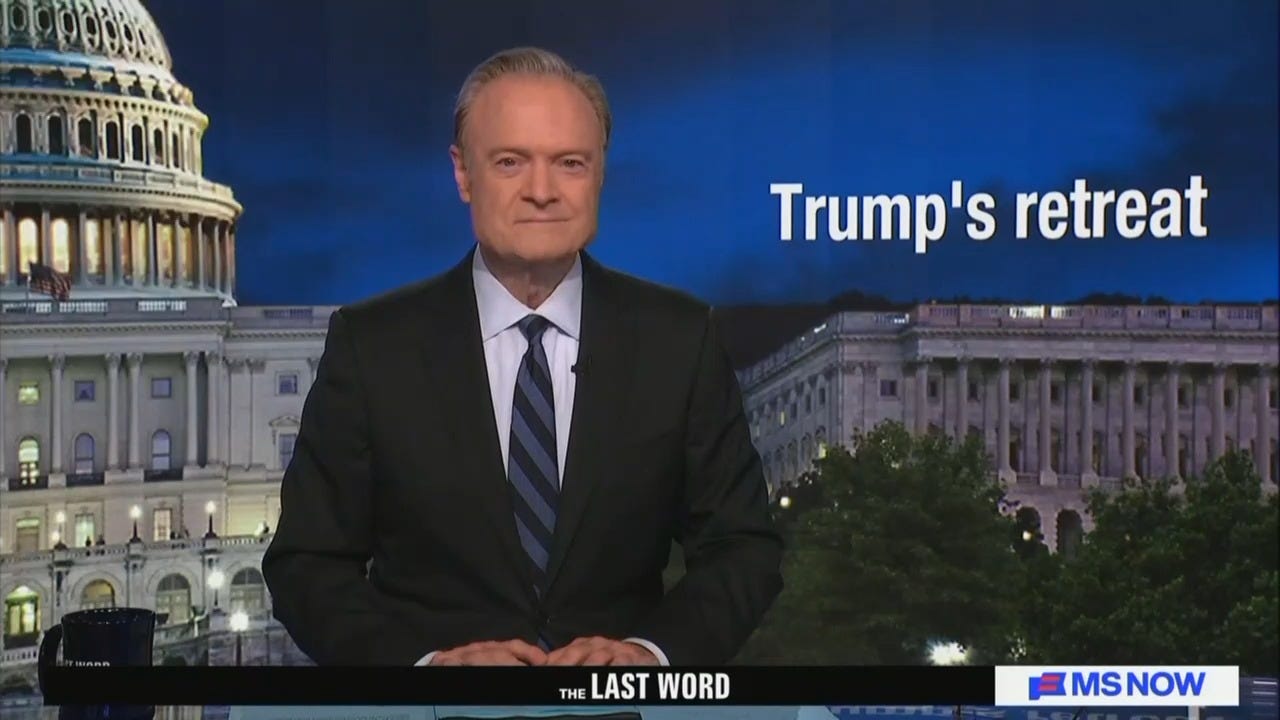
This week produced one of those coincidences that tells you something. National Review’s Andy McCarthy, a Fox News contributor, published a piece on the Iran memorandum titled “The Trump Administration Thinks We’re Imbeciles.” The same night, Lawrence O’Donnell said on The Last Word that “only an imbecile” could believe Trump had achieved a nuclear breakthrough, and that “Donald Trump thinks you’re imbeciles” for buying it.
Same word. Completely different arguments.
McCarthy was making a national security case — that the memorandum’s terms represent a substantive failure on the nuclear question. O’Donnell was making a political one — that Trump is conning his own base. They reached the same conclusion from opposite directions, for opposite reasons, and much of the coverage treated them as the same story.
Mark Levin hates the deal. Brian Kilmeade hates it. Nikki Haley hates it. Much of the conservative establishment that cheered Operation Epic Fury is now openly questioning the agreement that followed. For people who have spent years waiting for Trump’s own coalition to say out loud that he got something wrong, this week has felt like vindication. The political equivalent of hearing your rival’s family arguing through the walls.
That reaction is human. Trump spent a decade turning politics into tribal warfare. There is an impulse to enjoy the moment when his own supporters finally break. No reasonable person should pretend otherwise.
But the celebration is causing people to misread what is actually being signaled.
That’s a national security signal. It is being processed as a political scorecard.
On Morning Joe Wednesday, Joe Scarborough framed the conservative break as a trophy — “a rare moment when you’ve lost the New York Post.” On CNN This Morning, the cold open was “We’re going to start with the blame game this morning” — the scorecard as the organizing principle for the entire hour.
Politics has become so tribal that criticism is increasingly evaluated by who it hurts rather than whether it’s true. The first question is no longer whether the warning is right. It’s who benefits from it.
The hawks are not making political arguments. They are making substantive ones. Marc Thiessen — a Fox contributor who has dined at the White House and reportedly shaped Trump’s Ukraine position — compared the reconstruction fund to “offering the Marshall Plan to rebuild Germany while the Nazis were still in power.” That is a man arguing the merits of a foreign policy decision, not settling a political grudge. Kilmeade, one of Trump’s most reliable on-air defenders, looked up from the leaked memorandum text Wednesday morning and said “this makes absolutely no sense” — then wondered aloud whether the negotiators had even informed the president about what was in the agreement he planned to read publicly on Friday. Their complaint is not that Trump betrayed them. Their complaint is that he may have produced the very outcome they spent twenty years warning against.
Conservative media spent two decades teaching its audience that sanctions relief before verification was dangerous, that reconstruction money creates leverage for hostile regimes, and that Iran should not be rewarded before its nuclear ambitions are settled. Now many of the people who made those arguments are looking at this memorandum and concluding it does exactly those things. The interesting story isn’t that they’re upset. It’s that they appear unable to reconcile the deal with the worldview they spent years building.
The one place the alarm got heard rather than enjoyed was Anderson Cooper’s show Tuesday night, where foreign policy experts — Wendy Sherman, who negotiated the 2015 deal, and Carnegie’s Karim Sadjadpour — argued about whether the agreement actually achieves anything strategically. No glee. No scorecard. Just the merits. It stood out precisely because it was so rare.
The loudest critics of this deal are not people who wanted Trump to fail. They are people who wanted him to succeed, cheered the operation, trusted the strategy, and are now reading a memorandum that looks to them like everything they spent twenty years saying was dangerous.
That doesn’t mean they’re right.
But it does mean the story isn’t the argument. The story is whether the alarm is justified.
And you can’t hear the alarm if you’re too busy enjoying the noise.
Noise the product, Confusion the strategy, Viewership the goal.