


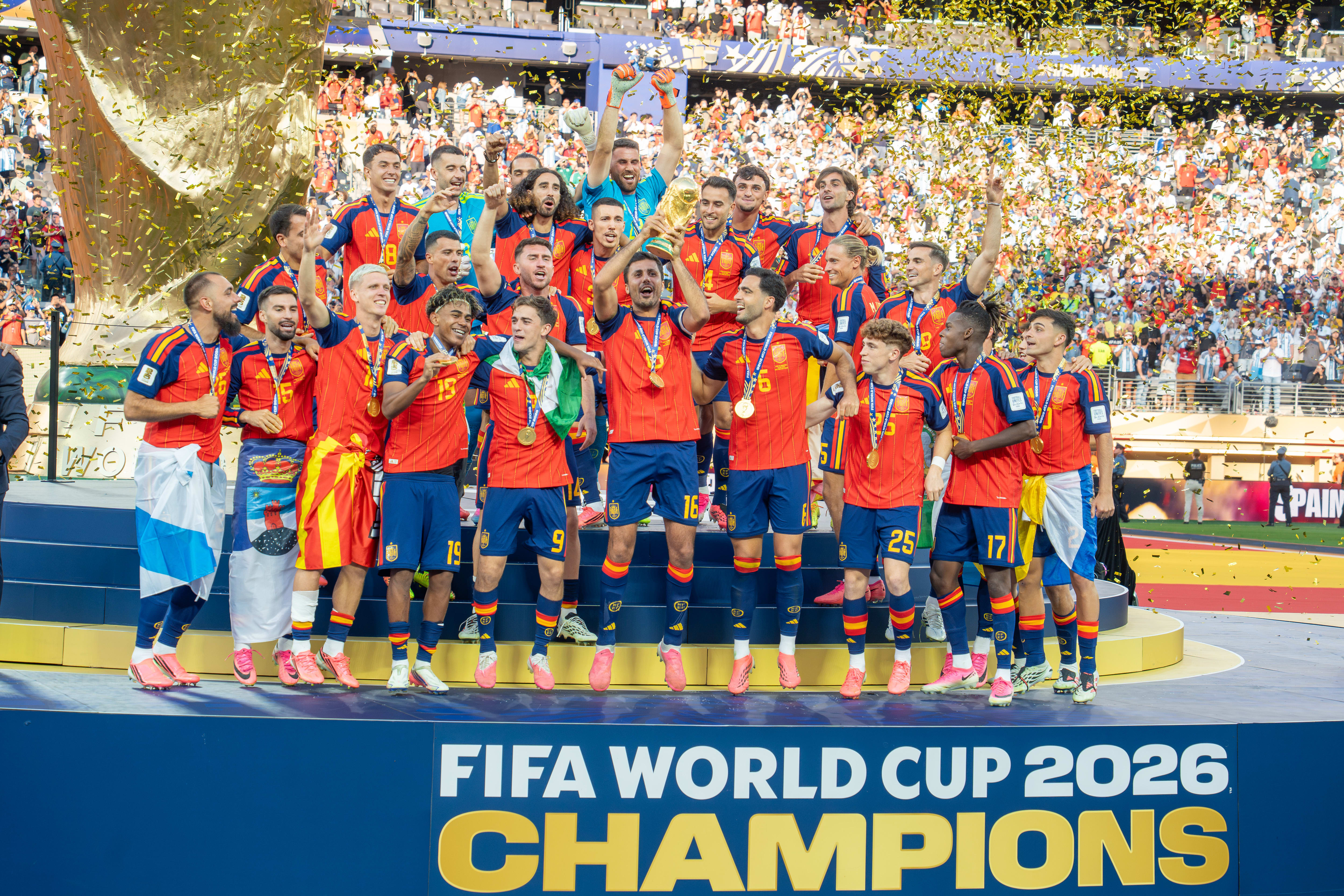
More Americans tuned in to watch the World Cup final between Spain and Argentina Sunday afternoon than to watch any other telecast in the past year, save one: the Super Bowl.
Nearly 63 million people watched La Roja defeat a cynical defending champion Argentina led by the greatest footballer of all time, Lionel Messi, shattering the previous U.S. record for a World Cup final by 36 million viewers. That number is half the size of the Super Bowl, but more importantly, no other telecast comes close.
Now the easy column to write is that the United States has gone soccer crazy, and there might be something to that. As I wrote yesterday, hosting the global sporting event provided a much-needed communal sense of joy that an isolated nation (both politically and in how we treat one another) desperately needed, but when one looks at the most watched programs over the course of the past year, something far more revealing sticks out.
Americans can't get enough of sports. The tentpole entertainment programs that used to rate alongside the big games? Not so much.
First, take a look at my handy dandy chart that shows the top-rated shows over the past year:
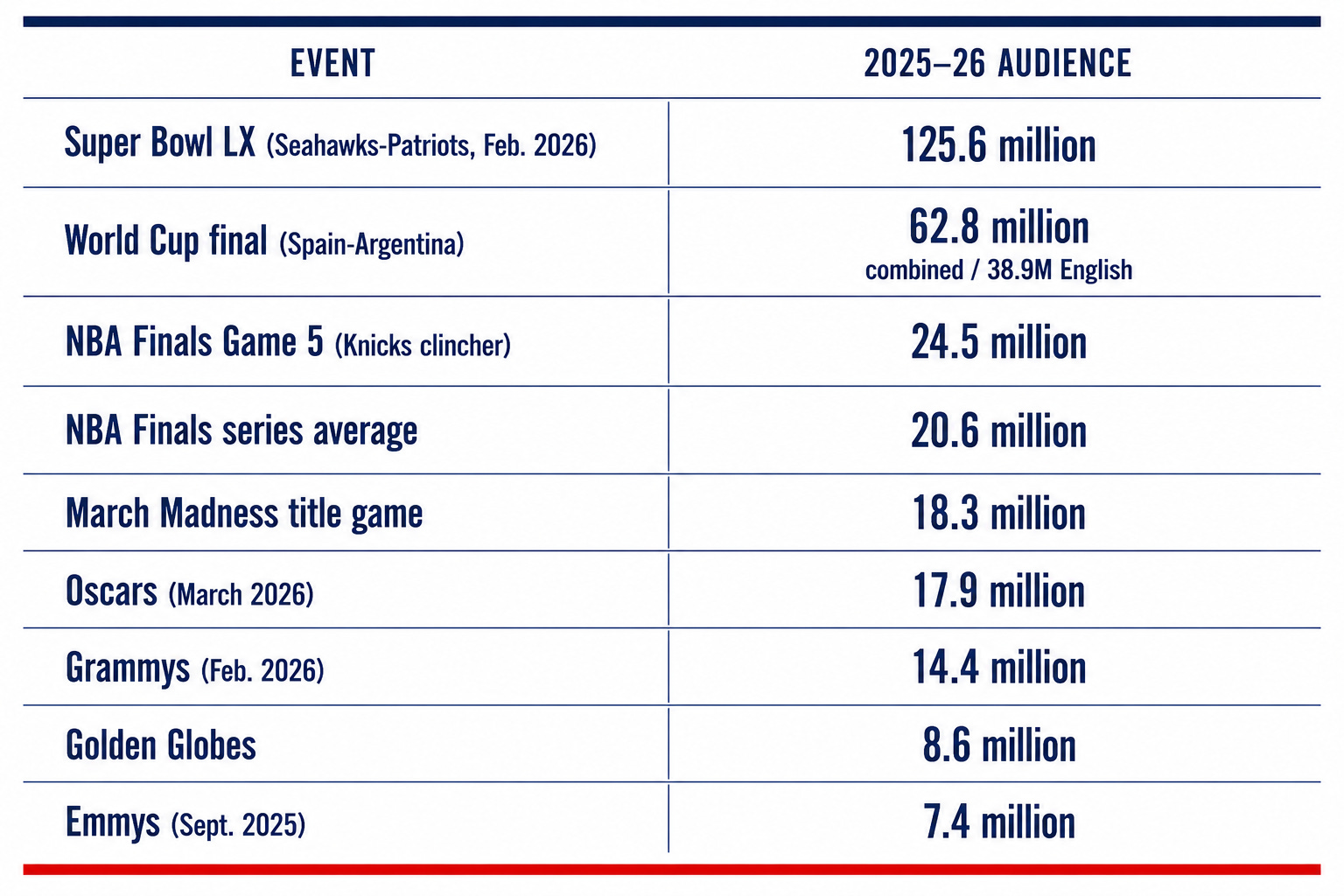
(Nielsen's new Big Data measurement flatters everyone this year, but it flatters the award shows too, and they still cratered)
Notice anything? The top five listings are all sports. The bottom four are the awards shows that used to compete. The easy trend line to extrapolate from this is simple: people are tuning into title competitions and opting out of the award shows. But the bigger question I aim to ask is why is that the case?
First, you have to appreciate what's great about final games, whether the Super Bowl, World Cup, or fifth game in the NBA Finals. These are not scripted events, and the real human drama unfolds in real time. I’ve long posited that March Madness was the first competitive reality show, and that, say, “tribal council” on Survivor isn’t that different.
Tuning in to see if Messi would lead his team of knuckleheads to repeat as trophy lifters or if they would turn into petulant shithousers is perhaps a nuanced storyline for us soccer-obsessed, but even laypeople were eager to see who leaves the pitch in tears of joy or defeat. And yes, the bizarre Eurovision-inspired spectacle of both pregame and halftime entertainment approximated the cultural spectacle of the Super Bowl. Was it schlocky as hell and much derided? Yes, but it got us all talking about the same thing at whatever has become the modern-day water cooler.
And that’s where we pivot to why entertainment award shows are losing viewers in droves. And no, it's not conservatives angry at liberal Hollywood, though I suspect that plays a not-so-insignificant role. The real issue is that showbiz has become so fragmented in its content and consumers that it no longer works as a topic at the water cooler. The days of everyone going to the same blockbuster movie (The Odyssey aside) are over. There are no longer three, or thirteen channels, of which we all watch the same thing. Hell, broadcast television shows are barely watchable, and there is a raft of streaming shows worth consuming, but it's impossible to keep track. It's all fragmented, and when it comes to award shows, I haven't watched 70-80% of the shows and performances being celebrated. And I’m the media obsessive type.
Look, it’s not all bad news. The Emmys drew 7.4 million, and the industry called it a win. And that’s entirely reasonable given the fractured entertainment landscape. But the Emmys’ viewership was barely one-tenth of the World Cup final, which, yes, is a quadrennial event with global reach. The supply is scarce, but the demand is high.
Entertainment products, and the award shows that serve as their purest expression, lack scarcity, in both product and platform, and that abundance has undermined their value along with the shared experience that comes from watching together. Like sports.