


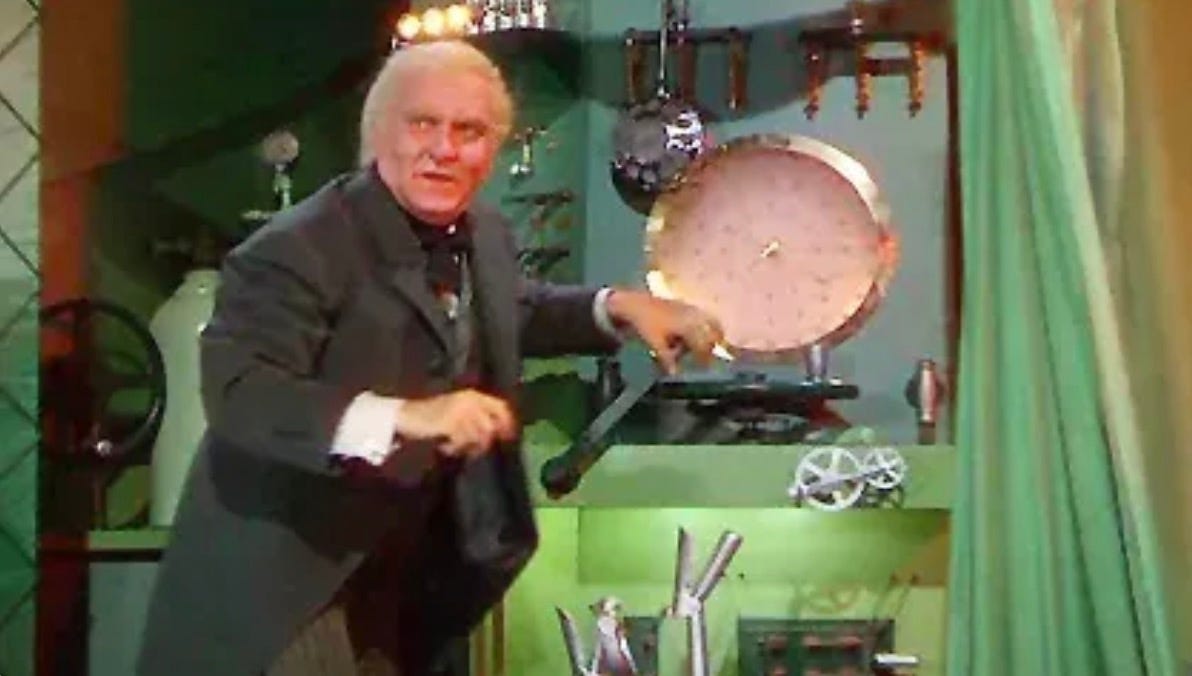
Americans have become incredibly sophisticated consumers of political information and remarkably poor observers of the systems producing it. We consume more political content than any generation in history. We can recite the arguments, identify the players, anticipate the moves. What we’ve mostly lost is the habit of asking who built the frame we’re arguing inside — and why it looks the way it does.
That’s the question I can’t stop asking.
Take Donald Trump. The coverage of his 2024 campaign focused heavily on the indictments — 91 felony counts, four separate trials, unprecedented in American history. Most of that coverage treated the legal story as the story. What got less attention was the more interesting question: how did a candidate facing 91 felony counts successfully reframe criminal prosecution as proof of political persecution, and have it work? Because that’s not really the story. It’s a story about a guy who understood that the institutions covering him had lost the credibility to define what his behavior meant — and that he could fill that vacuum himself. Understanding how he pulled that off tells you more about where we’re headed than any verdict ever could.
Here’s what the business model actually rewards: cable news and partisan outlets have learned, with remarkable precision, that the most profitable audience is an angry one. Not an informed one. Anger keeps you watching. Anger keeps you clicking. Anger makes you blame the other side for everything wrong in your life, which is a much more comfortable story than the complicated truth. So the incentive for every outlet, every host, every algorithm is not to help you understand the world more clearly — it’s to find the thing that makes your amygdala fire and keep firing. Nuance doesn’t do that. A coherent opposing argument doesn’t do that. The other side presented as a legitimate human being with reasonable concerns definitely doesn’t do that. What does it is the same thing it’s always been: an enemy, a threat, and the reassuring feeling that you’re on the right side of it. That’s not a bug in the system. That’s the product.
The press covered the events. The events were the distraction.
Last week I wrote about Zohran Mamdani and the fight over a parade. A mayoral candidate skips an Israel parade, Fox News calls him an antisemite, he changes the narrative by showing up to a different Jewish event. Most coverage focused on who was right or wrong. That’s the visible story.
What Mamdani did — whether by instinct or design — was refuse to let his opponents pick the battlefield. The accusation of antisemitism only works if the accused either defends themselves on the accuser’s terms or stays silent. He did neither. He changed the subject, physically, by showing up somewhere that made the accusation look absurd in context. He didn’t win an argument. He made the argument irrelevant. That’s a different skill, and it’s the one that actually determines outcomes.
Or take James Talarico, the Texas Democrat who quotes scripture better than most Republicans. Coverage treated this as a novelty story, a religion story, a viral moment. The interesting story is what happens when a Democrat successfully occupies a lane that one party had assumed was permanently, exclusively theirs. The panic on the right isn’t really about theology. It’s about the sudden realization that the story they’d been telling about who speaks for faith in America isn’t actually theirs to own. Talarico isn’t interesting because he’s religious. He’s interesting because he walked into a room conservatives thought they’d locked.
Or take Jill Biden’s book tour. She went on CBS to humanize herself and her husband. Instead, she told a reporter she thought Joe was having a stroke during the debate — and seemed genuinely surprised when Fox News treated it as confirmation of everything they’d been saying for two years. A politically sophisticated actor hears themselves say that and immediately knows what the next morning looks like. The fact that she apparently didn’t is the story. Not the stroke comment. The insularity that made it possible.
Three different stories. Same thing going on underneath.
That’s the lens I’ll be using here.
I’ve spent thirty years watching how these decisions get made — in newsrooms, control rooms, edit bays, and more pitch meetings than any human should be asked to survive. Not as a fly on the wall. As someone making the calls. I know why certain stories get green-lit, and others don’t. I know what editors are actually thinking versus what they say publicly. I know how business pressures and platform incentives and personal relationships all get folded into what eventually lands in your feed as “the news.”
Most people spend their time arguing inside the frame. I’m more interested in who built it.
And yes, there will be Arsenal content. That part is non-negotiable.
Chyrons and news titles are wrestling announcers, projecting insults
I’d love to know WHY news has allowed its kayfabe-ification.
Is Fox/CNN/MS giving us what we want to pay for, was it just a bad bet by Jeff Zucker chasing Rup, or are they just lazy?
Why are they turning us into an Indiocracy?